Rethinking “Fresh is Best”


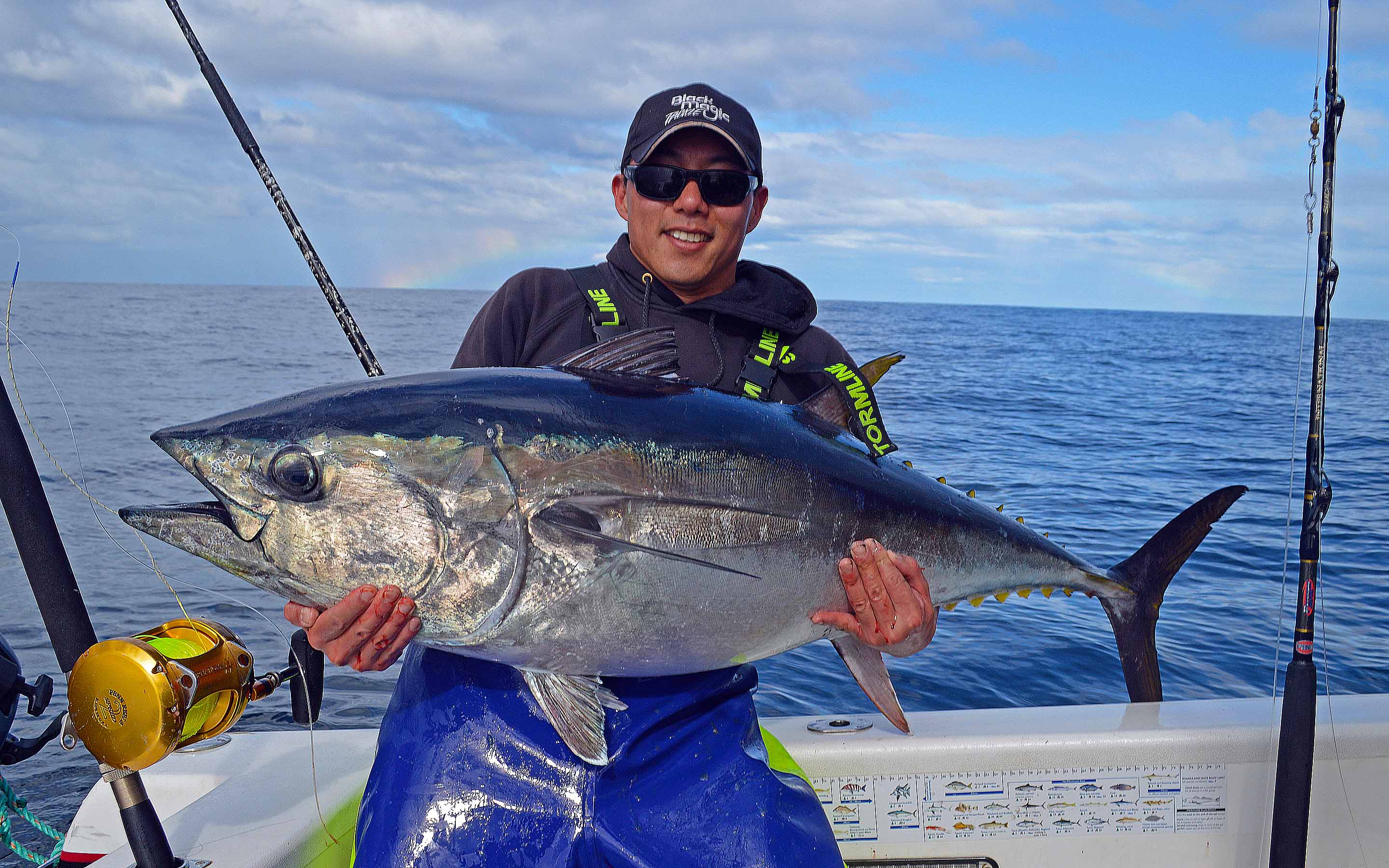
For years, the phrase “fresh is best” has been deeply ingrained in how we approach seafood. Built on the good intentions of reducing spoilage and avoiding unpleasant odours, I subscribed to this thinking without question.
That changed after I read The Whole Fish Cookbook by Josh Niland. His approach—treating fish like red meat and focusing on dryness over constant washing—completely reshaped my process. Since then, dry aging has become a staple. The results speak for themselves: deeper flavour, improved texture, longer shelf life, and a far better end product that anyone can achieve at home.
Rethinking “Fresh is Best”
A New Perspective on Freshness
Dry aging is simple. Instead of rushing to fillet your catch, the fish is kept whole in a controlled, dry environment for several days. During this time, natural enzymes break down muscle fibres to improve tenderness while developing a richer, savoury flavour. Moisture slowly evaporates, concentrating the taste and producing a dry exterior that crisps beautifully during cooking.
Practically, it also offers flexibility. After a long day on the water, there is no immediate pressure to process your catch. You can hang the fish to age and deal with them a few days later once your gear is cleaned and packed away.
From Capture to Cooler
The process starts the moment the fish is landed. Immediately after capture, dispatch the fish humanely using a firm blow between the eyes or the Japanese iki jime technique to spike the brain. This reduces stress and prevents muscle movement, preserving flesh quality.
Bleeding is next. For most species, cutting the gill filaments is sufficient, though larger fish like tuna should be bled near the pectoral fin. Removing blood maximizes flavour and shelf life. For tuna, remove the gills and internal organs immediately to drop their internal temperature. For other species, gutting can wait, but must be completed before aging begins. Keep the fish chilled in an ice slurry until you get home.
The golden rule here: do not fillet the fish yet.
Why Whole Fish Matters
Dry aging is most effective when the fish is kept whole, or as a trunk. This protects the flesh from excessive drying and bacterial exposure. Filleting too early introduces "sweating" when flesh sits on flat surfaces. This pooling liquid accelerates decomposition and produces that unwanted “fishy” smell. Hanging a lone fillet limits your aging to a couple of days before the flesh turns hard like jerky.
Setting Up at Home
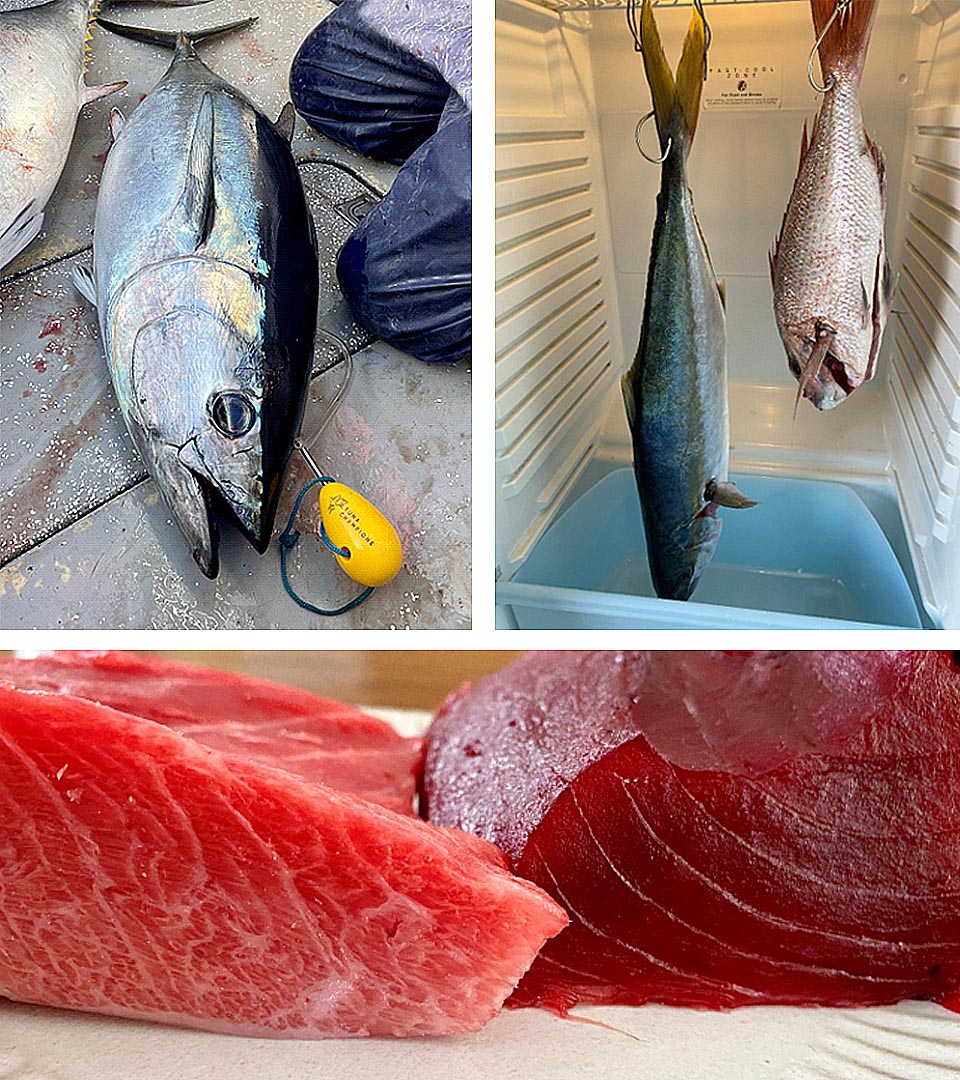
A standard upright fridge easily converts into an aging cabinet by removing the shelves and leaving a top rack for hanging. Fish can be hung upside down by the tail using wire hooks or twine loops. I fashion crude hooks using fencing wire and standard fish hooks.
Before hanging, thoroughly remove the gills and guts, wipe the cavity dry, and pat down the exterior. Scale the fish beforehand if you plan to eat the skin. Ensure the fish does not touch any surfaces, and place a tray underneath to catch draining liquid. Keep the fridge at or below 2°C for a three-to-five-day aging period. The exterior will look dry and shrivelled, which is exactly what you want.
Working with Larger Fish
Massive species require a walk-in cool room. With proper space and temperature control, even barrel bluefin tuna or swordfish can be aged whole. I have successfully aged large fish up to 160kg using this method.
The Payoff
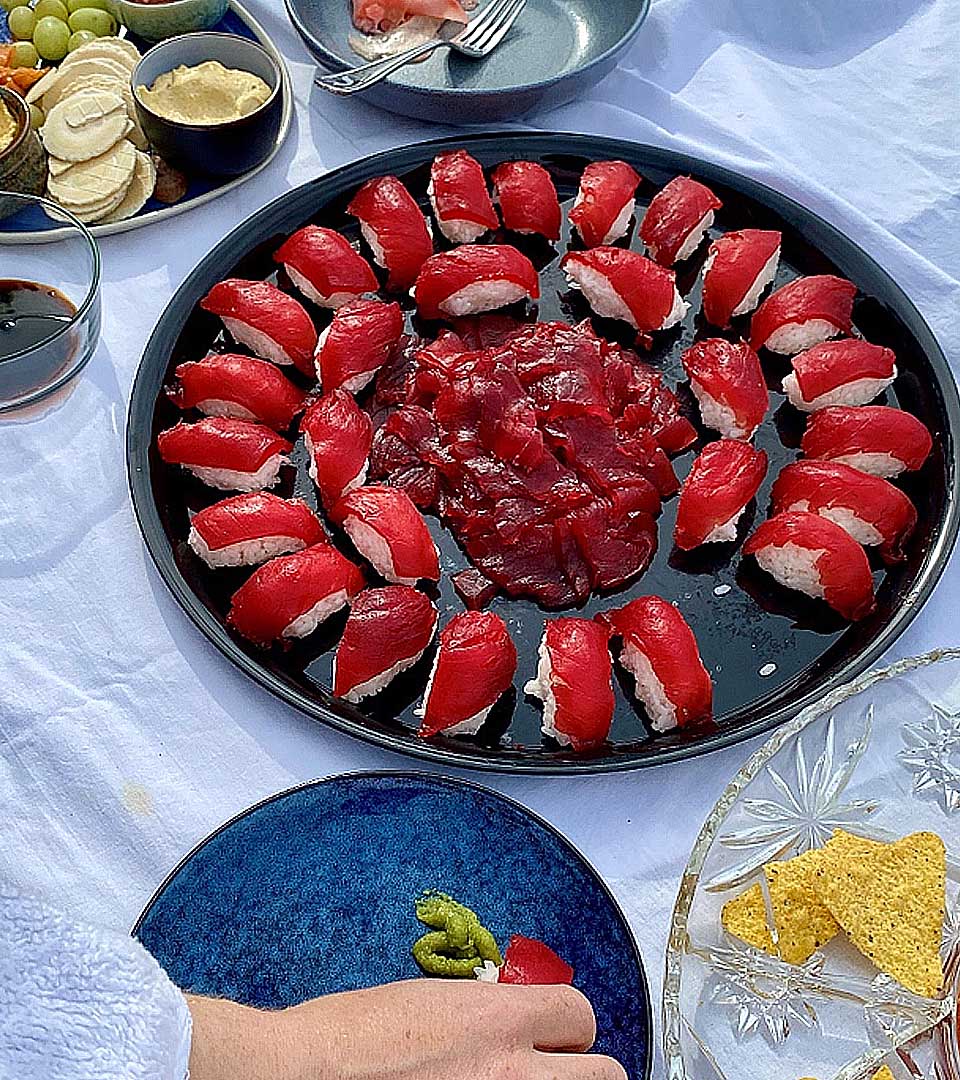
Once aged, cutting through the dry outer layer reveals firm, moist, and vibrant flesh. The improvement in texture and flavour is immediate, whether eaten raw or cooked.
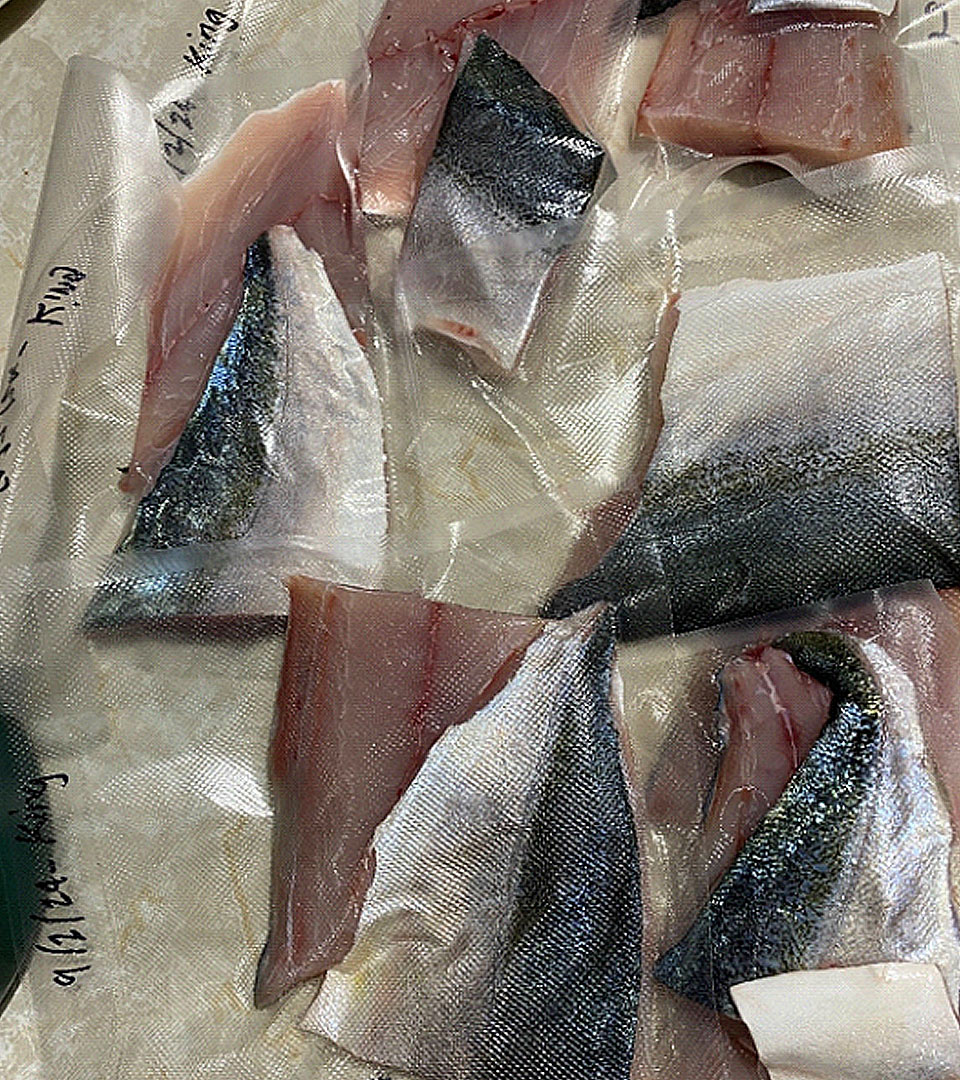
Never wash the finished fillets. Introducing water promotes bacterial growth, accelerates oxidation, and dulls the flavour. Use a paper towel or knife to gently scrape away any remaining residue. Store fresh portions uncovered on a wire rack with a paper towel underneath, or vacuum seal and freeze them for long-term preservation.
While it works across many species, it is exceptionally effective for tuna, kingfish, snapper, mackerel, barramundi, and trevally.