Deep Sea Frontiers: A Showcase of Jonah Yick


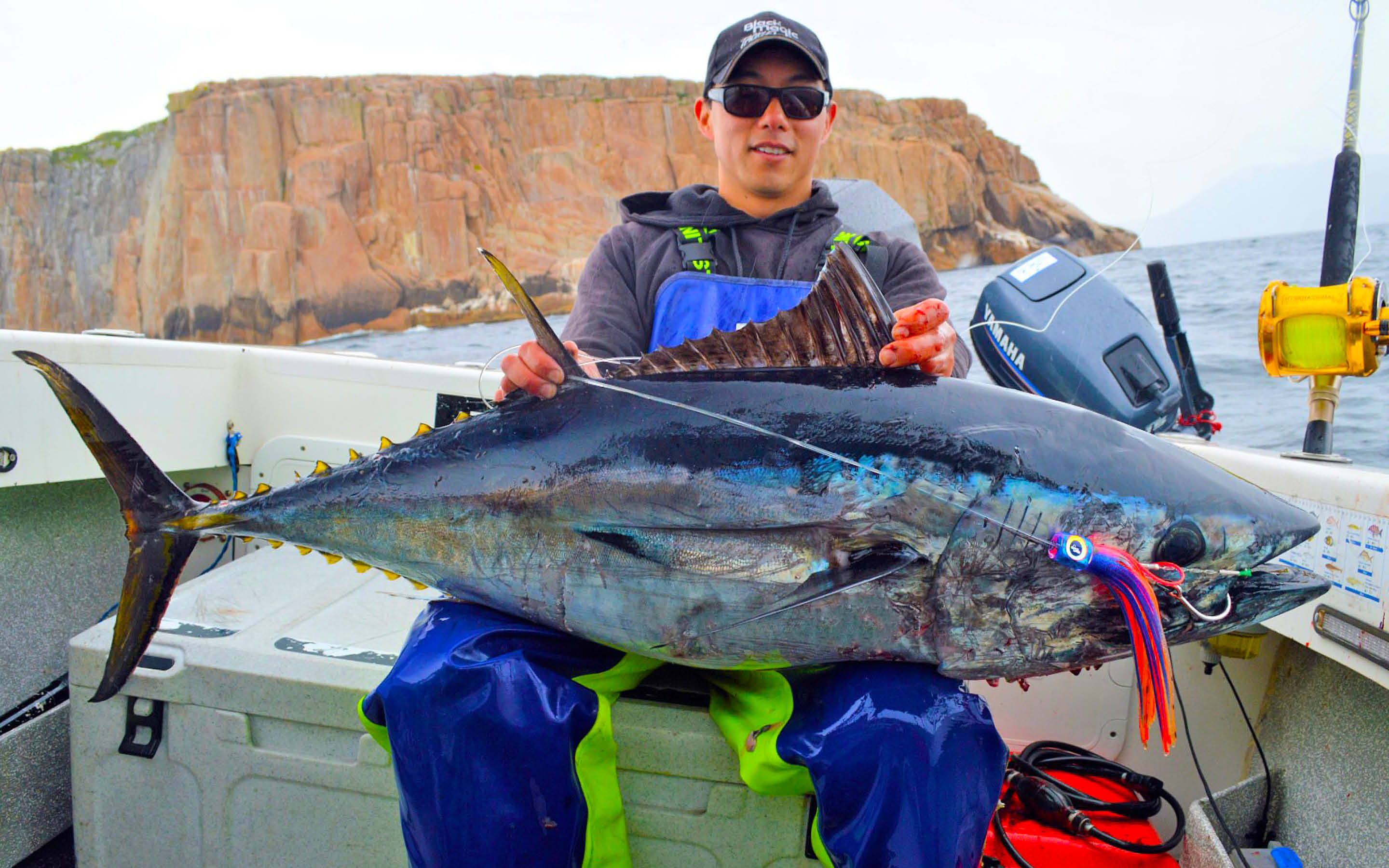
In the world of professional angling and marine science, few bridge the gap between data and the deep blue as seamlessly as Jonah Yick. A Tasmania-based fisheries manager with over 20 years of experience, Jonah’s life is driven by a "hunter and gatherer" ethos and an insatiable curiosity for the "alien-like" species of Southern Australia.
With a Bachelor of Marine Science (Honours) from the University of Tasmania, his expertise spans both freshwater and marine environments. As a scientific ambassador for the Tuna Champions program, Jonah advocates for sustainable, ethical fishing and the importance of citizen science. His work focuses on maximizing the value of every catch—whether through responsible harvest or contributing vital data to marine research.
1. Can you tell us where your fascination with aquatic wildlife started and how it influenced your professional work and fishing world?
From a very young age, I was drawn to the sea. Some of my earliest memories are of exploring rockpools and sandflats with a small aquarium net in hand, flipping over rocks and searching for the fish and invertebrates hiding beneath them.
Fishing became part of my life around age seven or eight, shortly after my family moved from Hong Kong to Tasmania. Everything about my new home was unfamiliar, including the fish species. That mystery made every trip exciting. My late father began taking me fishing locally, and from that moment on, I was hooked. Not knowing what might be on the end of the line kept me coming back for more and fed a passion that shaped my future.
It was during those formative years that I realised I wanted to work with fish. I didn’t yet know whether it would be in commercial fishing, aquaculture, fisheries management, or research — only that my path would be connected to the water. Today, at 40 years old, I’ve spent over 18 years working in the fisheries field, which has given me a deeper understanding and appreciation of fish and the aquatic environment.
2. Can you share a memorable moment on the big seas you've captured that evokes strong emotions?
It was June 2022, late in the swordfish season for Tasmania, with fellow Black Magic Tackle Pro Staffer Wesley van den Herik, and our mate Tom Srodzinski. I decided to take the gamble anyway. We steamed 40 kilometres out to the continental shelf, with my little 5.5 metre trailer boat rising and falling with each swell, as we prepared for a day of deep dropping. Baits were sent down 500 metres into the dark, cold depths.
Seven drops went by without a touch from a swordfish. With daylight fading, we decided on one final move. Midway through that final soak, the rod loaded up and began to run. A swordfish!
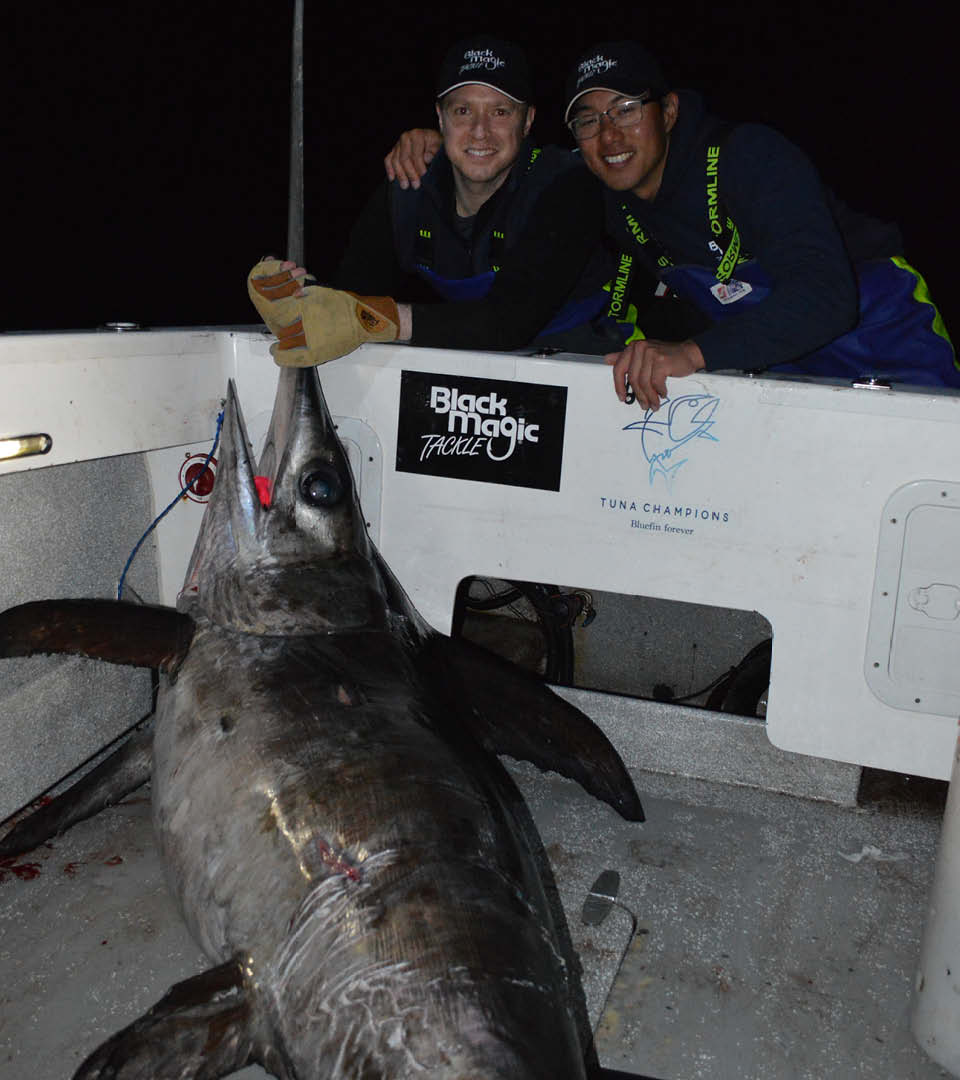
Tom had been waiting years to wind in his own sword. As we strapped him into the Black Magic Equalizer gimbal and harness, the three of us knew this fight would likely stretch into darkness. Two and a half hours in, the line began to angle upward. About 20 metres behind the boat, the first sign appeared: flickering, colourful “disco” flashes from the battery-powered leader lights.
When the swordfish finally came into the beam of the spotlight, the scene hit us hard — its thick, powerful tail had been almost completely torn away. Circling beside it, watching with predatory calm, was a 200-kilogram mako shark. Plans changed instantly. Instead of tagging and releasing, we scrambled to secure it before the mako claimed the rest. It was bittersweet — a magnificent creature, damaged but still breathtaking. Tom’s swordfish, approximately 140 kilograms, lay on deck. His fish of a lifetime.
3. What challenges have you faced while capturing the desired deep-sea species?
The biggest one is always the weather. Conditions offshore can change quickly, and when you’re fishing in half a kilometre of water, even a slight increase in current or tide can make it nearly impossible for your rig or sinker to reach the bottom.
Wind can be just as disruptive. On those days, you often need to keep the boat in reverse continuously just to maintain the correct angle on the line. It’s hard work, and it comes with risks: waves can crash over the transom, seasickness can creep in, and what should be an enjoyable day chasing fish quickly becomes an uncomfortable slog. And of course, the only thing more restrictive than the weather is being on baby duty at home!
4. What are your go-to rigs for pulling up monsters from the deep?
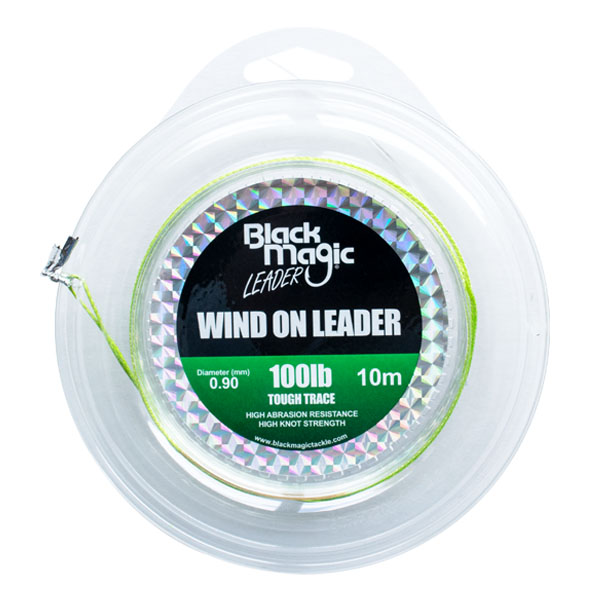
When it comes to general deep dropping, my preferred setup starts with 300 pound Tough Trace paired with 8/0 and 10/0 KLT hooks. The heavy trace is essential — the deep water is full of aggressive, toothy species that will happily destroy lighter leader material. The Tough Trace holds up incredibly well against repeated hits and abrasion.
The KLT hooks offer a great balance of strength and sharpness. They’re razor-sharp and made from a lighter gauge than standard commercial circle hooks, which means better penetration, especially in deep water where hook sets can be sluggish. Their circle hook design allows you to set the hook if needed, but more importantly, they keep the fish securely pinned during the long haul back to the surface.
When I’m specifically targeting swordfish, I upsize to a 400 pound leader to handle the scuffing, slashing, and abrasion from their sharp bills. I also swap to a heavier gauge circle hook to cope with the immense pressure of these battles.


5. What is special about hunting off Tasmania, and are these species also found in New Zealand?
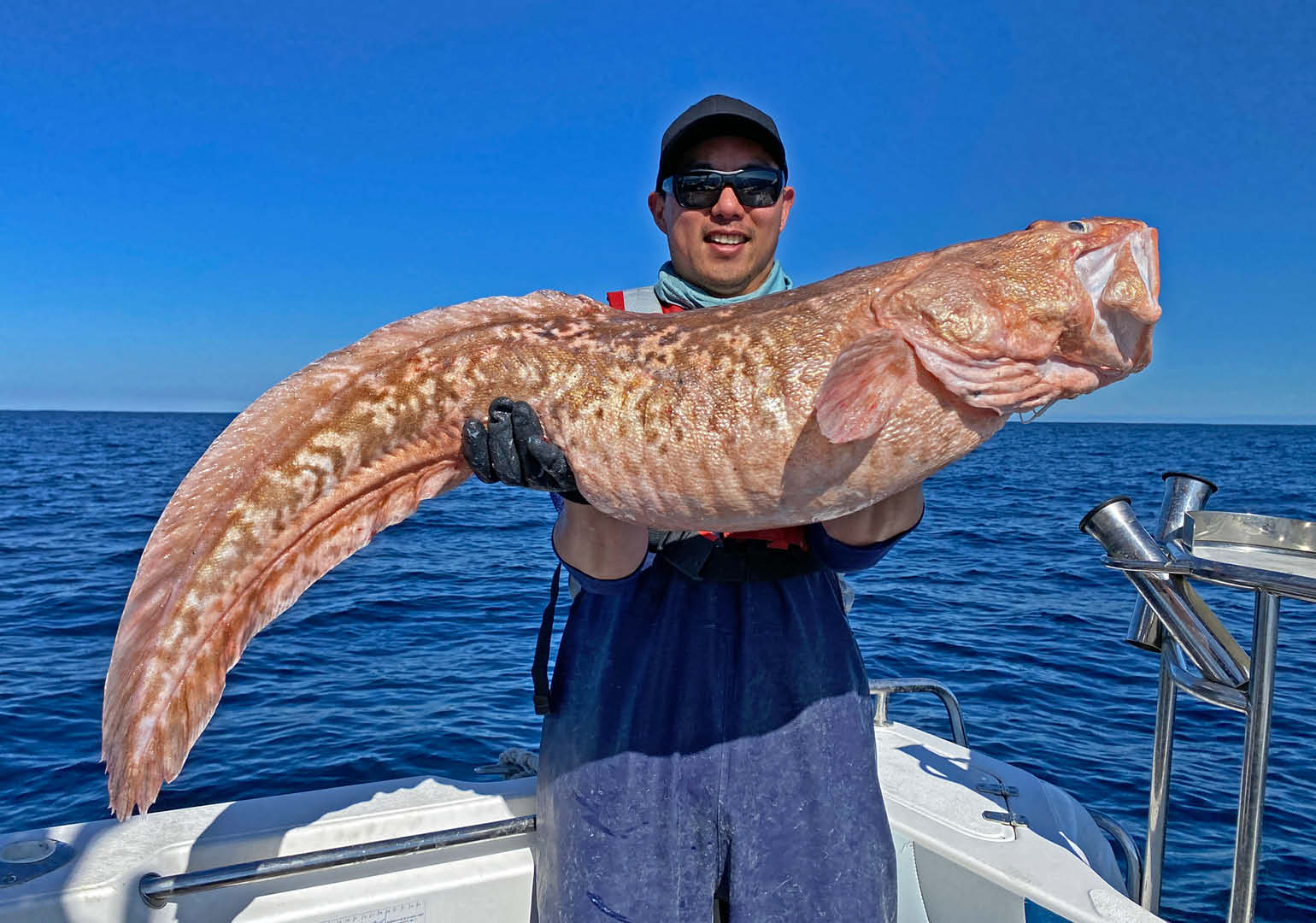
The attraction is the sheer unpredictability. At extreme depths, you encounter "alien" creatures with oversized jaws and needle-like teeth. The bonus? Most are exceptional eating. Because Tasmania and New Zealand share similar latitudes, we host many of the same species, like hapuka, bass groper, and blue eye trevally. While NZ might edge us out on size and variety, both regions offer a world-class deep-drop experience.
6. Can you tell us more about your ‘hunter and gatherer’ ethos?
For over 30 years, my philosophy has been to honour any animal taken by utilising as much as possible. My partner and I rarely buy meat; our three chest freezers are stocked with our own catches. It’s an ethical, healthy way to live. As an Ambassador for Tuna Champions, I promote best-practice handling and preparation. Whether keeping a fish for the table or releasing it, it’s all about respect for the resource.
7. In our vast oceans, do you believe undiscovered species like the coelacanth still exist?
Most definitely. NOAA estimates that explorers have seen less than 0.001% of the deep ocean seafloor. With over 90% of the ocean being "deep" (deeper than 200m), scientists believe there are up to a million species down there—two-thirds of which remain undiscovered. We are still just scratching the surface of what lives in the abyss.
8. Have you come face-to-face with a viperfish, hatchetfish, or gulper eel yet?
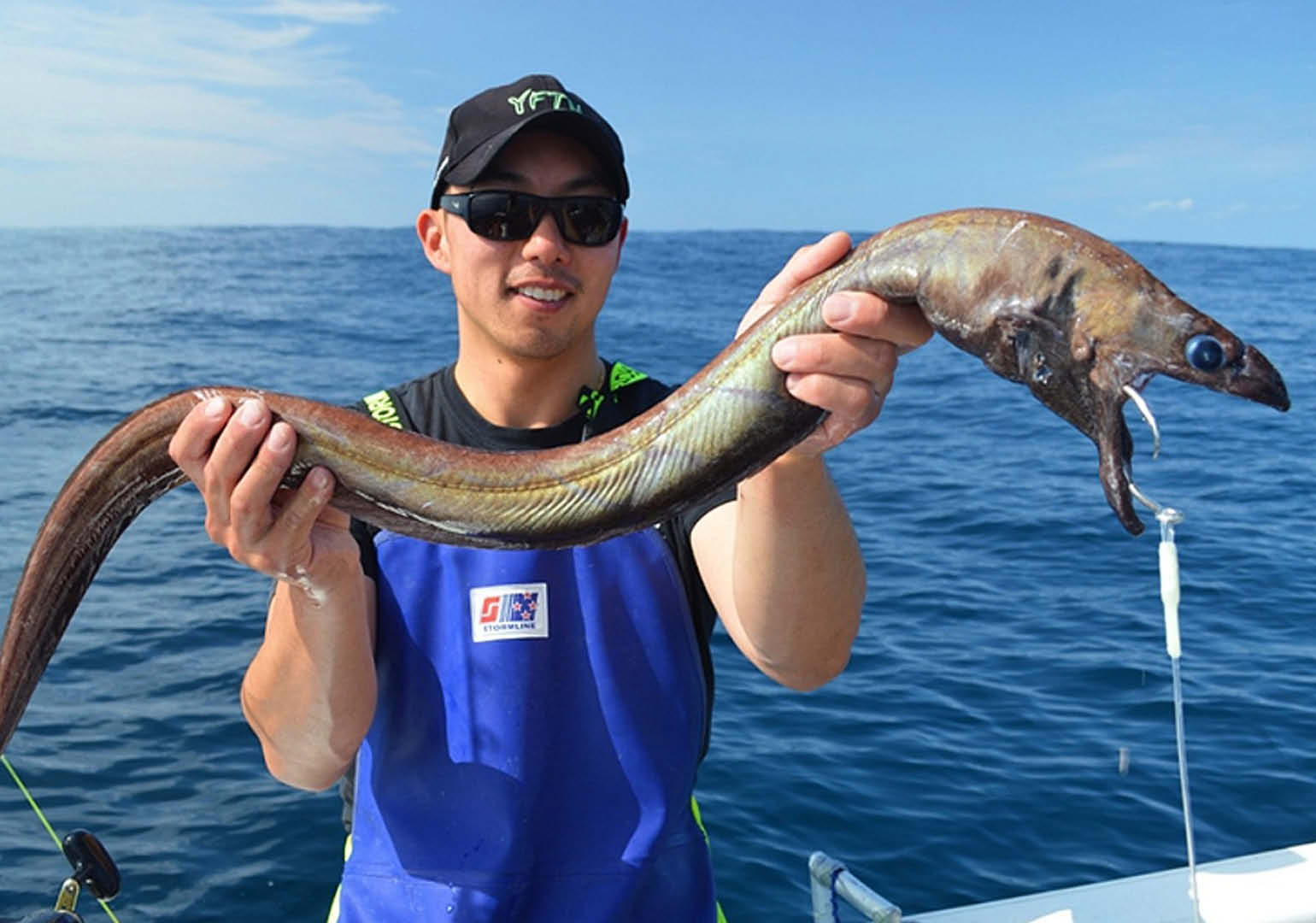
I haven’t caught those "nightmare" species myself, but I’ve seen them as preserved specimens at the CSIRO National Fish Collection where my partner, Helen, works. It’s a library of biodiversity that allows me to see these creatures in detail without hauling them up from 1,000 metres! I have, however, caught numerous basketwork eels from depths of up to 1,800 metres—you truly never know what’s coming up from that far down.

.jpg)

.jpg)